IF THE PHRASE FITS, WEAR IT.

Big foot small shoeBut you look so good.  It’s a phrase that follows anyone with a sadness or illness, follows them like a hornet homing in on a sweet target.

Having that phrase as a rallying cry for any special interest group misses a larger point:  no one likes to look like shit, much less be told so.

I’ve worked with plenty of people over the last 16 years and it is not very often that anyone looks as awful as they report feeling.  Does that mean they aren’t depressed or anxious or in pain or sad or sick or whatever?  So why does a depressed woman wear make-up?  Certainly it’s not with the intention of having it run down her face.

A woman with M.S. wrote to me recently and reported that she got really tired of people telling her she looked well when she felt anything but, so she tried an experiment.  For a time, she stopped wearing make-up, didn’t fix her hair or pay much attention to her clothes.  She purposely let the exterior reflect how the interior felt.  The results were mixed:  people were empathetic, but that came at the price of not being taken seriously.  Even worse, she wasn’t proud of herself; she liked looking good and if that meant that others didn’t know her past that, then so be it.  She went back to wearing make-up and looking like she wanted to look, even though the comments about her looking-better-than-she-is expected-to-look continue.

Maybe it’s the whole there-but-for-the-grace thing, like a magic wand that makes bad things like grief or disability disappear.

Could be,  like Jack Nicholson so vehemently put it, people can’t handle the truth.  Who can?  While you may not be able to imagine a life with paralysis, it doesn’t mean that others don’t go on with their lives.  We don’t like to be reminded.

Some of us might feel we’re not up to it; that, in the same situation, we’d fail at looking good .
love saying 5Do we really want someone to tell us we don’t look so good?  Speaking as a woman whose multiple sclerosis doesn’t always show, I can unequivocally give that a fat thumb’s down.  Nobody likes to admit they feel like hell (okay, some people do).  And it isn’t good form to remind others they look that way, either.  For the most part, we’re a society of liars; it’s how we get through our social day.  Doctor greets patient and says, “Hi, John, how ya doin’?”  John says, “Fine.”

It’s true, too, that when we don’t know what to say, we usually say something stupid, even though it’s intended to be uplifting or cheerful.  People are afraid of sadness or illness.

Nobody ought to have a lock on the phrase “But you look so good!”   To claim it is to say that no one else can have an emotional response to it.  It’s not only the disabled who dread hearing those words; it’s any one of us whose appearance belies the truth.

We all have culpability.  For the disabled who are offended by being told “you look so good”, there’s a responsibility to educate others about why the phrase is offensive.  Even more, it’s an exquisite opportunity to educate about disability.  Bring it to a 1-1 level, able to disabled.

After all, I wouldn’t be surprised at how often the non-disabled among us get annoyed by the very same phrase when it’s said to them.

Note:  Some of you are saying I’m ignoring the exclusionary word “but”.  But I’m not.  I’m enough of a re-framer of words to know that sometimes meanings are made where there is none.  I stand by saying that rather than being exclusionary, the use of “but” can be an expression of disbelief, as in “bfut she was here a minute ago.”  Try out this meaning, anyway; you’ll gain a lot of perspective.

Kathe Skinner is a Relationship Coach, Certified Relationship Expert and Marriage & Family Therapist in Colorado where she conducts communication workshops for couples, pre-married’s, the invisibly disabled, and the over 50 crowd.  Kathe enjoys collaborating with KatheSkinner marriage & family therapistother professionals in order to reach more relationships affected by hidden disability.  She sits on the Executive Board of the Invisible Disabilities Association, is a regular contributor to Disability.gov., and is an ardent-and-natural-teacher-without-a-classroom.  She has been diagnosed with multiple sclerosis for over 30 years.  More about Kathe at www.BeingHeardNow.com.

LOVE ME, LOVE MY CHAIR

Rachel1A couple of weeks ago I introduced Rachelle Friedman to those of you who don’t know her.   If you recall, she became wheelchair-bound due to a freak accident at her bachelorette party.  I promised to tell you more…

Not to be cheesy, but Rachelle and her husband, Chris, are nothing short of inspiring.  They never chose to be in the spotlight, but they are.  Their lives together have a level of transparency they’d never planned, where privacy doesn’t look anything like it used to.

The very act of being married is a prime example.

He stayed with her?  Actually married her?  No shit!  Uh, what about sex?  They don’t “do it”, do they?

The answers are all “yes”.

Much is made of Chris’ staying with her.  It’s not just that she had an accident, ended up in a wheelchair, and except for that everything else stayed the same.  Rehab was long and painful.  With paralysis, her body changed and she’s plagued by low blood pressure, which makes activity dicey.  And even though she can’t move her legs, nerve pain still exists — something medication doesn’t completely take away.  So why does Chris stay?  “The extra hardships don’t outweigh his love,” Rachelle will tell you.  It’s not that he “stayed with a girl in a chair that makes him great.  It’s that he’s loving and giving no matter what.”

I hope people are inspired by our love, not because of my disability.   – Rachelle Friedman  rachelle2

Rachelle doesn’t understand the fuss that’s made of her everyday life, either.  “Just because I wake up in the morning, eat breakfast, work out every now and then and play sports with a disability…does not make me inspiring.”

One of the biggest changes has been in Rachelle’s career path, and the corresponding change in life plans because of it.  She can no longer teach aerobics, nor can she be a reliable 9-5 employee.  This young woman likes to inspire and also to educate.  She is registered with a speaker’s bureau and has been doing some cool speaking gigs.  If money was not a roadblock, wants to be a coach, helping other people.  With the loss of that second income, the couple struggles financially.

You could call her the Queen of Lemonade, but I think there’s more to Rachelle than that.  I’m sure there are moments…   But she is blessed with talent, beauty, and drive, so Rachelle would be a winner no matter what.  That she has a wheelchair in the way, well, that’s just a lotta lemons.

Visit Rachelle at www.facebook.com/rachelleandchris and on Twitter at @followrachelle.  Watch for her book next year!

Kathe Skinner is a Relationship Coach, Certified Relationship Expert and Marriage & Family Therapist in Colorado where she conducts communication workshops for couples, pre-married’s, the invisibly disabled, and the over 50 crowd.  Kathe enjoys collaborating with KatheSkinner marriage & family therapistother professionals in order to reach more relationships affected by hidden disability.  She sits on the Executive Board of the Invisible Disabilities Association, is a regular contributor to Disability.gov., and is an ardent-and-natural-teacher-without-a-classroom.  She has been diagnosed with multiple sclerosis for over 30 years.  More about Kathe at www.BeingHeardNow.com.
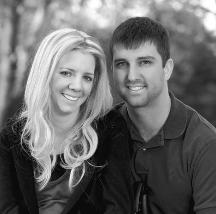
HOW CAN PARALYZED BE PRETTY?

Photograph of Rachel and her husband Chris on their wedding day.

Photograph of Rachel and her husband Chris on their wedding day. Photo credit: Martha Manning Photography

I blog for the government’s disability website, Disability.gov   If you haven’t visited, do so; it’s cool, comfy, and inspiring.  At a recent look-see, I plopped into a story about Rachelle Friedman, written by the person who knows her best — herself.

You might remember her story.  Last year, at Rachelle’s bachelorette party, a friend’s playful gesture resulted in a spinal cord injury when Rachelle was pushed into the swimming pool.

The wedding was as sweet as weddings always are; maybe even bittersweet. By necessity, the wedding was delayed until Rachelle was recovered enough physically.  Because of the weight she lost, Rachelle’s wedding dress fit differently.  And the couple’s first dance brought the guests to tears.

At her age, Rachelle has had to face, career-wise, what is usually faced much later in life.  Changing careers is generally a choice, but not for her.   As a Program Coordinator, Rachelle planned and taught classes like line dancing and aerobics to seniors.  She calls herself an “unreliable employee” now, one who can’t be counted on as a 9-5 employee because of low blood pressure and nerve pain.Re-focusing, this young woman looks to doing more speaking.

Unsure of a definite direction, this young woman wants to make a career out of public speaking, maybe relationship coaching (which is how we got acquainted.)  Not surprisingly, judging from her first career choice, Rachelle’s into helping others.   She still wants to be inspiring and educating to others.

What happened to Chris and Rachelle is one of those “out of time” things; being disabled young is like a long prison sentence — no choice but to serve it out.  Besides the emotional disruption, the financial cost been significant, too. Being disabled isn’t cheap, and earning potential all but disappears.

So much of this couple’s future can’t be imagined, and is one that certainly wasn’t planned.  While they don’t yet know it, this couple’s future will be different in another way, too:  the love and compassion they have for each other now will be small in comparison to what it will one day be.

Next time, I talk with Rachelle about  marriage, sex, and the fishbowl of being a disabled hero.

Visit Rachelle at www.facebook.com/rachelleandchris and on Twitter at @followrachelle.  Watch for her book next year!

Kathe Skinner is a Relationship Coach, Certified Relationship Expert and Marriage & Family Therapist in Colorado where she conducts k-cropped-4x6communication workshops for couples, pre-married’s, the invisibly disabled, and the over 50 crowd.  Kathe enjoys collaborating with other professionals in order to reach more relationships affected by hidden disability.  She sits on the Executive Board of the Invisible Disabilities Association, is a regular contributor to Disability.gov., and is an ardent-and-natural-teacher-without-a-classroom.  She has been diagnosed with multiple sclerosis for over 30 years.  More about Kathe at www.BeingHeardNow.com.

PISTORIUS GUILTY OF MURDER? SAY IT ISN’T SO.

While apartheid has been legally abandoned in South Africa, it can still be a racially uneasy place.  But some questions cut across racial lines:  Is Oscar Pistorius guilty of murder?

It was a made-for-television story starring Oscar Pistorius, a double amputee running on bladed “legs” in last summer’s Olympic Games, and his girlfriend, Reeva Steenkamp, a beautiful model.  Life in a luxurious gated community.  Fame, wanted or not, right up there with South Africa’s idolized soccer players, Bafana Bafana (The Boys).

Think about it – a man who by anyone’s definition is disabled participating in the Olympics, traditionally a place where only legends Pistorius blade runner
belong:  the fastest and most durable; the strongest; people who soar highest and go furthest; who combine talent with heart and passion.  Athletes with demonstrated ability to endure and transcend pain and to remain focused despite it.

Unique in the world, Olympians are the best of the nations that send them.  World-class.  And Oscar Pistorius belonged.

Even so, efforts were made five years ago to ban him from competing with the big boys because, get this, his so-called “cheetah legs” gave him an unfair advantage.

Funny that able-bodied runners would be threatened by the introduction into their midst of someone with no legs.  You can’t make this stuff up.  Legs that were replaced not by bionic ones, but by artificial ones.  Oscar didn’t flip a switch and go smokin’ down the track like some crazed stock car.  He never cruised into first place.  His swiftness wasn’t accounted for by Mercury-like wings affixed to his artificial feet.  Like every other athlete, he earned the right to run.

On Valentine’s Day, Oscar Pistorius is said to have murdered Reeva Steenkamp.

For me, the Pistorius story is especially tragic.

I’d probably win in Vegas betting that Oscar Pistorius never intended to be a symbol for many who are disabled.  But he was.

It was 2012, mid-summer in London, and the media couldn’t ignore the runner’s Cinderella story.  In the final heat, Pistorius ran the 400 meter against record-holder Kirani James.  Their exchange of name bibs and embrace at the end of the race was moving; it spoke of mutual respect and the honor James felt to share the track with such a determined, worthy, and ground-breaking opponent.  I’d like to think it was James’s way of giving Pistorius the keys to the clubhouse, heretofore for the able-bodied only.  Irony of ironies, James is black; Pistorius is white.

Despite this Olympic nod, the Paralympics, which followed, were not televised (not that I could find, anyway.)

Never meaning to, Pistorius put disability smack dab in the faces of people watching at home.  There’s always been an element of able-bodied gawking at the disabled; a “somewhere else but not in my neighborhood” flavor.  The South African athlete brought it home to their neighborhoods, taking it out of the invisible realm of the Paralympics to the center stage of London in the summer of 2012.

Pistorius generated pride when he won and even when he lost, and the tears that often accompany such moments.  He was a winner in a world that often deems the disabled losers.

Pistorius bore a dignity in doing his job and doing it exquisitely.

Pistorius was modest in his remarkable accomplishments.stamp, portugal, paralympic, disabled athletes, runner, disabled

Pistorius never sought the limelight; he wasn’t boastful or militant.

And maybe that’s why the emotion Pistorius generated for me, as a disabled woman working with others who are disabled, was so great.  His victory was not for any cause, although I wanted it to be.  I wanted his courage to be the stuff of film, like the young Patty Duke (herself disabled with bi-polar disorder) as Helen Keller in “The Miracle Worker”.  Or Tommy, the pinball wizard of Pete Townshend’s rock opera.  Of politics, like President Franklin Roosevelt or U.S. Senator Max Cleland.

Heroism is rarely sought by heroes.  We make heroes because we need them to lift us from our realities.  Heroes overcome where we haven’t been able to.  They’re the youngsters still alive in our fantasies, reading comics and surmounting unfairness with a dexterity we only dream about.  I struggle as I weigh my need to flout Pistorius’s achievements as a disabled man competing in the regular world, with how I feel about the murder accusation he faces.

I’ve decided to let it rest.  The fact will always remain that Oscar Pistorius was the first double-amputee to win a gold medal in the arena of able-bodied world track.

For me, giving that kind of hope stands on its own.

k-cropped-4x6Kathe Skinner is a Relationship Coach, Certified Relationship Expert and Marriage & Family Therapist in Colorado where    she conducts communication workshops for teens and parents, couples, pre-marrieds, the invisibly disabled, and the over 50 crowd.  Kathe enjoys collaborating with other professionals in order to reach more relationships affected by hidden disability.  She sits on the Executive Board of the Invisible Disabilities Association, is a regular contributor to Disability.gov., and is an ardent-and-natural-teacher-without-a-classroom.  She has been diagnosed with multiple sclerosis for over 30 years.  More about Kathe at www.BeingHeardNow.com or at her blog, ilikebeingsickanddisabled.com.