Here’s a news flash: stress can make you sick.
Maybe you haven’t gotten the message that stress can have a permanent effect on chronic illness. Clouds your thinking, screws up your judgment. Gives you the weepies and the angries. Can take away your will to vacuum the house or cook a meal. The effects of stress on the mood and memory components of your brain can get screwed up or even shut down.
Stress looks like lots of things: a fight with your partner; anger or hurt at work; having to euthanize your pet (even making the decision); the temperature of your environment; hunger; lack of sleep, and more.
And our stress reactions aren’t just “in our heads”; they’re physical, too. For example, my ability, literally, to stand or walk is impacted by the amount I exert myself in a hot environment. Actually, I don’t even have to exert myself when I’m hot: the very act of being is enough!
Worst of all are the cognitive impairments suffered from too much stress. ”Chemo brain” is a good example. While some doctors argue that chemotherapy cannot affect cognitive functioning, recent studies have shown that negative symptoms can begin as quickly as when a cancer diagnosis is received. Seems the only thing that can do that is quite literally what we think when that diagnosis is received. Cognitive behaviorists won’t argue that irrational thoughts are what need to be changed in order to change our feelings and ultimately our behavior.
Likewise, Adele Davidson talks about the relation of stress to “chemo brain” (negative cognitive symptoms like loss of memory, confusion, slow or difficult processing, etc.) in her book, Your Brain After Chemo. I think many our of disabilities’ stress responses mimic chemo brain; certainly my multiple sclerosis does.
I’ve been talking about “distress”, or “bad stress”; however, we can’t go without “eustress”, or “good stress”. Unless we stress our minds and bodies in appropriate ways (which differ for each of us) by doing things like walking around the block, carrying the wash down the stairs then folding and it putting way, reading, playing cards, debating an issue, problem solving, etc. we become mentally and physically flabby. Ever see someone in a waiting room doing a crossword puzzle? Same reason lots of adults work on jigsaw puzzles.
There’s a double benefit: not only is the mental exercise good for the brain, the pleasure and relaxation have a measurable chemical benefit as well.
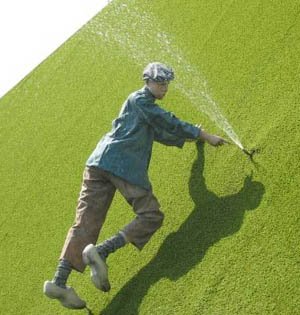
It’s clear that sticking your finger in the dike doesn’t do much to hold back a significant quantity of stress. In the flash flood of stress, we need to get to higher ground, take a deep breath and be glad we saved ourselves from drowning.
Kathe Skinner is a FABULOUS RELATIONSHIP coach who presents workshops, couples retreats, and teleseminars for couples who want to live happily ever after. She is sometimes stressed by her husband, David, and their two hooligan cats, Petey and Lucy.

 Couples Who Talk