CASTING A SPELL: EASIER THAN YOU THINK

Casting a spell is done by the lovers among us; no exorcism needed.   Anyone who’s had a broken heart knows words and potions don’t work anyway.  And, unless you’re a crazy cat lady, the likelihood of being under the spell of a lover’s words is far greater than being eID-100183804nchanted by a black cat.
Loving someone calls out parts of us untouched by anything else. Loving and being loved is the genesis of trust, fearlessness, safety, vulnerability.  Linking to another calls for courage, and hones our concept of “forever”.  Falling under love’s spell is the only time we’re wholly, nakedly, ourselves.
There’s no doubting there are parts of love’s enchantment most of us would choose to do without.  Being vulnerable, for instance.

It’s so scary that most partners would rather fight, go silent, resentfully acquiesce, or run away rather than connect.   We think that connecting with the one we love calls for us to “give ourselves over”, “lose” ourselves.  And that that person will, with malice aforethought, mistreat us.

Holding ourselves back from our partners, investing the bulk of our emotional energy in children, jobs, or pets may seem a safe way to cope.  It’s not.  Actions may seem to be reasonable when they’re really frantic, reactive, and irrational.  The result is disconnection.  It’s alone-ness, alright; one that’s soul deep.

Being by yourself and being in a relationship isn’t always unhealthy, though.  In fact, the bulk of who we are is lived individually, as it should be.  The relationship itself stays healthy when there is a communicated, mutual understanding of, and confidence in, the “us-ness” that bridges one to the other.

Successful relationships are overlapping, not pancaking.  A well-designed spell allows each partner to breathe.

Take John and Mary, for instance.  To him, being alone means time to decompress after work, diddling on the computer or watching the news.  For Mary it’s a long, hot, bubbly soak spent with a trashy novel, candles . . . and no kids.

Are we now too busy to spend time re-casting love’s spell?  Too dour to be delighted in loving and being loved?  So impersonal that we let our thumbs wirelessly communicate our needs?

Is casting a spell a lost art?

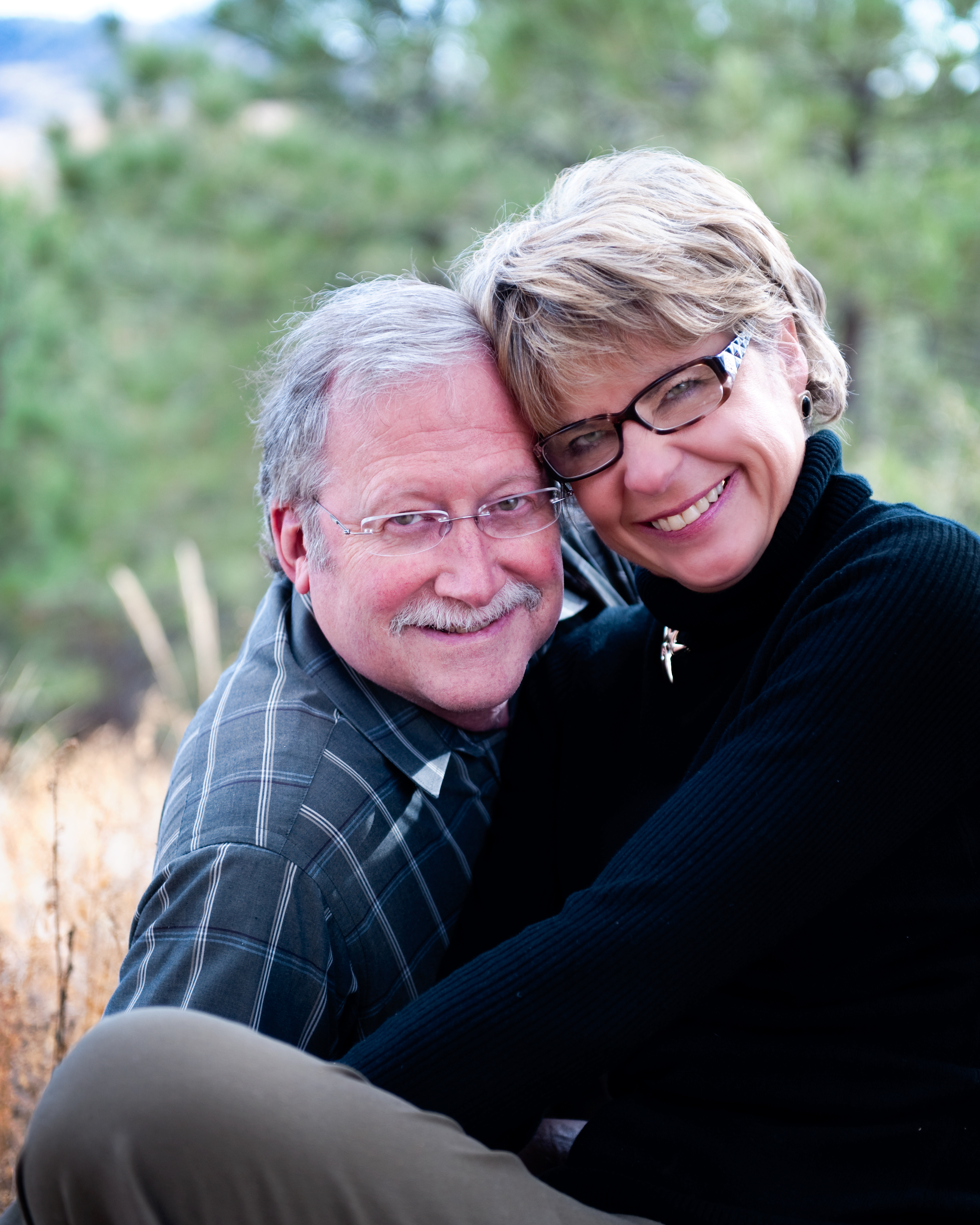
A passionate lover of the season of beauty and decay, Kathe Skinner is a Marriage & Family Therapist specializing in teaching couples how to be safe and vulnerable at the same time.  She lives in Colorado with her husband of 28 years, David, and their 2 hooligan cats, Petey and Lucy.  Black spirit cats Squeak and Winston Bean never felt safe on Halloween.
 
© 2014, Being Heard, LLC
Image courtesy of 9comeback at FreeDigitalPhotos.net


SUICIDE ISN’T JUST ABOUT DEPRESSION

suicide wordly

(This blog was first published by Disability.gov.)

 In the mega-wattage aimed at Robin Williams’ suicide everyone had something to say.  But when all was said, everything went back to the way it’s always been when mental health’s the issue.

The disabled or chronically ill population often inhabits a landscape where mental health is a place of shifting sands; they know that psychological symptoms are only part of the territory.  And though they might not know it, anyone else who’s ever seriously considered, or attempted, suicide has been there, too.

Reason 1:  Suicide is a perfect storm. A confluence of factors accounts for an attempted or successful suicide.  The biopsychosocial effect describes three separate but linked factors that make for the perfect behavioral storm.

The first, biology, talks about the genetically present markers that provide the tinder that can predict a life-ending event.  Certain mental health disorders result from biological events and can’t be caused by events in our lives, schizophrenia for example.  In fact, most of the diagnoses found in the Diagnostic and Statistical Manual of Mental Disorders, Fifth Edition (DSM-V), are a result of nature, not nurture.  (That doesn’t mean that nurture or experience can’t affect nature.  For example, brain structure can actually be changed by the cumulative effects of stress).

A solid neural whack is enough to upset the brain’s apple cart and to actually affect the apple cart itself (i.e., traumatic brain injury, chemotherapy).

The psychological factors refer to how thoughts and feelings are processed into behaviors.  How we think and what we think about ourselves and our world are significantly influenced by nurture and experience.  Amazingly, significant amounts of emotional stress will actually change the structure of the brain – the hard wiring.

The good news is that when brain structure has been determined this way it can also be reversed.  Buddha had it right when he said that we make the world with our thoughts.

Adult caregivers, or older children in our own families, are the early source of how we position ourselves psychologically.  Peer groups, even one person within that group, are also influential: bullying comes to mind.

Social factors refer to what’s happening around and to us.  For example, when terrorists blew up the World Trade Centers people around the world experienced significant psychological reactions that were clinically diagnosable.  These are the situational diagnoses without a biological cause, although an existing mental health problem may be triggered by events.

For instance, a major depressive disorder can be brought on by grief, whether or not a history of depression exists.   Trauma can be brought on by exposure, or over-exposure, to a horrifying event.  That’s what happens when people are flooded with 24/7 video of disaster images, or a job involves continual exposure to disaster or tragedy.

Reason 2:  Suicide is a game of dominoes.  A precipitant can be found in any third of the biopsychosocial formulation, igniting reactions in the other two spheres.  Reactions are ramped up as one sphere feeds the others in endless loops.  Without intervention in at least one area, a body’s systems can break down.

For example, I’ve worked with diabetic clients who pay poor attention to insulin levels, diet, and exercise.  This is especially true of teens.  Reasons might include not wanting to be different, interference with having fun, being marked as “not normal”, or that testing is an interference.  So while anxiety is part of diabetes’ medical description, that emotion may be worsened by psychological factors like negative thinking, and social factors like being shunned at school.

Reason 3:  Suicide is personal.  Duh.  Suicide is the ultimate personal decision and action.  Even if you think you’ve made up your mind about whether it’s ever right for a person to take such action, there’s always a “but what about this?” scenario.   The rule that works is stated “It Depends”.

Consider these factors:

· Quality of life

· Loneliness

· Unrelenting physical pain

· Chronic emotional pain

· Persistent emotional and/or mental pain despite treatment

· Terminal illness

· Loss of dignity in living

· Fearfulness about the future

Which of these situations justify taking your own life?   Do you think that one area of the biopsychosocial model predominates in a decision to commit suicide?  Does seeking to die always signify depression?

In 1975 the Karen Ann Quinlan case went to the U.S. Supreme Court before the right to die with dignity for those in a vegetative state was established.  It might be said that Karen Ann’s parents fought for the right to “commit suicide for her”.

The 1981 film starring Richard Dreyfus, Whose Life Is It Anyway?, addresses a quadriplegic’s right to die by refusing nourishment – a passive suicide.  The film presents the moral, legal, ethical arguments that are often arrayed against individual choice.  Not much has changed: decades later over 90% of states don’t allow for physician-assisted suicide, what is euphemistically called death with dignity.  

Our society lags behind other industrialized nations regarding physician-assisted suicide.  Here the rule is that the illness must be terminal with physician intervention occurring only when death is judged to be imminent.  Rather than being enlightened, our nation’s religious, legal, and medical institutions are queasy at best about death, and hands-off at worst.

The result is that lots of suffering happens well before a physician provides assistance.

Reason 4:  To suicide or not to suicide, that is the question.   Without human resilience the rate of suicide would skyrocket.  That this is true is demonstrated by people who don’t commit suicide even though they share circumstances with others who do and even though their mood is likewise affected.

In the case of minors and adults with diminished intellectual capacity, it ought to be our business.  But all American institutions consider all suicides their business, acting in many ways to prevent it.

Death of any kind seems to be owned by the living, whether it’s scary or exciting or mourned or praised.  The morals of the civilized world seek to prevent death at any other hand than its own.  It’s a great irony that once a life is saved little energy may be expended in assuring the quality of that saved life.  Society sends double messages:  suicide is prevented but it all too often doesn’t accept the burden of providing for care or being respectful and inclusive to those who’ve been saved from a fate-worse-than . . .

Reason 4:  Suicide can be just a matter of time.  Robin Williams’ death illustrates that suicide can be the result of many factors, not just depression.  He was loved around the world with an enormous talent and humanity that made a difference in many lives.

It wasn’t enough.

Robin Williams carried the burdens of Bipolar Disorder, so his death ought not to have surprised anyone who knows about the illness.  It wasn’t just the depressive side that Williams’ displayed, although that’s what most news reports covered.  I suspect it’s because most everyone is familiar with depression as causal in suicide.   A rare opportunity to educate around the world about Bipolar Disorder, which includes periods of depression and mania, was missed.

While most everyone knows that depression can lead to suicide, poorly understood may be the role of mania, which is more than mile-a-minute speech and behavior and includes impulsivity, especially relevant here:  Williams’ final impulsive act was to hang himself with his belt, not a well-thought out suicide.

Reason 5:  Stress can result in suicide.    Any problem in an individual’s system – chronic or acute illness, situational or inherent mental illness, social or environmental factors, the ways in which we think – can provide the potential for distress.   Lots of straws have to drop into place before the camel’s back is broken.

Even so, suicide isn’t a slam-dunk.

But know this:  chronic illness or disability increase the odds of being negatively affected physically, mentally and socially by distress.  An already-stressed system is already part of the way there.

And while some of us are more exquisitely tuned to stress than others, it’s familiar territory for everyone.   Even so, from prisoners of war, to marathon runners, to cancer survivors, many of us display a resilience we didn’t know we had.

Robin Williams was carrying financial problems, mental illness, and a fairly new diagnosis of Parkinson’s disease into an upcoming year of hefty professional commitments.  Despite the affection of the world, Williams ended his life alone.


For the abundantly stressed, chronically ill, or ultimately alone, like he was, suicide may be the most understood act of all.


This blog was first published by Disability.gov.  

Kathe Skinner has been diagnosed with multiple sclerosis for over 35 years, which has compounded genetically predisposed depression.  She knows first-hand what suicidality feels like.  Ironically, she finds her work as a Marriage & Family Therapist anything but depressing.   She is in private practice in Colorado where she lives with her husband, David, and their 2 hooligan cats. Read more about Kathe at www.beingheardnow.com or ilikebeingsickanddisabled.com.

Kathe welcomes your comments and can be reached at 719.598.6232.

Image courtesy of David Castillo Dominici at FreeDigitalPhotos.net
 
©  2014, Being Heard LLC
 

WHY DISABILITY INCLUSION WON’T WORK

ID-100144311This post was first published the first week of August, 2014 by the federal government’s blog Disability.gov.  To date it has had over 1,500 hits.

As a Marriage & Family Therapist with multiple sclerosis, I write for Disability.gov, my own blog, and others like it, getting the opportunity to be a source of strength for people and their families. That’s why I was surprised when one organization denied my professional presence because I didn’t have that specific chronic illness/disability.

Though illness-specific groups may be essential to living well, the “micro” view of disability dilutes what’s important for the non-disabled world to know.  Advocating for one chronicity over another may be a reason society doesn’t see an inclusive, “macro” view of disability/chronic illness.

For inclusion to be successful the commonality between disorders needs emphasis, not the differences between them.

Too many chefs in the kitchen.  The more “chefs” that compete for “counter space”, the smaller the counter space per chef becomes.  Just ask me and David when we’re in the kitchen together.

People’s attention span is similarly filled up.  With only 8 seconds before the brain moves on, it’s imperative that disability advocates grab attention quickly.  It’s not about the cause; it’s about whether the cause catches the eye.  Think pink.  If you associated it with breast cancer awareness, you just illustrated my point.

And when many organizations compete for the same amount of space, there’s always an organization that doesn’t make the cut. It takes lots of money to develop brand-awareness, keeping any disability in the public eye, which is where lots of fund-raised dollars go. For example, the success of breast cancer’s “pink ribbon” campaign reduces visibility of all other cancers. The “pinks” don’t even share the spotlight.

Interestingly, there’s been a pinkish backlash that the campaign is about advertisers rather than the illness itself. Some corporations may spend much more on advertising and product-development than they do supporting patients through corporate giving.

Holding a sign.   Over millennia, physical characteristics have defined which partner we pick in order to further the species.  Even today, positive physical attributes often define who we choose in a variety of situations.

Studies in social and behavioral sciences repeatedly demonstrate this phenomenon.  Ask yourself who is generally more desirable – even approachable – a pretty, smiling woman or the same woman who’s using an assistive device?

While physical traits may vary across culture and time, physical disability seems always to be a disqualification.

Different is bad.   When Mom and I went mushroom hunting, she knew what was safe to pick. Even so, except for the two of us, no one in our mushroom-loving family ate Mom’s soup. .

Most of us seek sameness:  what we already know represents safety in a dangerous world.  Like knowing which mushrooms to eat, being able to quickly pick out who is different is a survival technique that can increase our chances of being on the winning (not dead) side.  While jumping to conclusions poisons thinking, when it comes to survival, what is thought to be safe is better than being sorry.

People with visible disabilities and chronic illnesses pay a stiff toll, daily. Even de jure protections like the Americans with Disabilities Act (ADA) don’t quickly change society’s de facto attitudes or treatment. Consequently, significant portions of the population entitled to the protections of the ADA remain invisible, choosing to avoid what happens too often to the disabled in work, housing, and relationship.

The in-crowd. My mother tried to get me to act in rational rather than group-think ways by employing inter-species logic that often involved lemmings.  Like lemmings, we like to affiliate.  Higher-order species have a “mine is better than yours” mentality; no one likes to be chosen last for kickball. Put another way, a person needs to feel superior to someone else. For example, I’m sometimes told, “At least I don’t have multiple sclerosis.”

Rather than forming a coalition that has strength in numbers, disability associations are often narrowly-defined and exclusive, repelling people who don’t fit the bill (think pink). Sameness attracts the same, so when selectivity combines with disability the result may be a man who judges other disabilities as not being as prestigious or disabling as his own. Or that another chronicity is less normal than his own.

Show me the money.  Fundraising 101 teaches that attracting glamour to a cause is a win-win:  Celebs earn brownie points for social responsibility and organizations gain public awareness which they hope translates into dollars.

How successful a cause is at the funding game is based on two realities from the world of social psychology:  The group with well-produced and well-managed public relations and advertising is judged to be trustworthy and knowledgeable; and, the more followers an organization has, the more adherents it draws. The Labor Day telethon is illustrative:  highly regarded spokespeople increase giving; and the more people give, the more others are likely to give, too.

There are reasons all people don’t unite under the disabled/chronically ill banner.  If no one otherwise knew you were disabled, would you want them to know?  Do you have trouble identifying with some types of disability?  Want to escape the judgment, treatment, discrimination, politics, classism, fractionalization, in-fighting, and politics of disability inclusion?  Or do you simply have other things (like eating) on your plate?

The discomfort with, fear of, and misunderstanding of the disabled population still exists, even among the disability community itself.  Housing disproportionate numbers of the disabled, asylums existed as recently as fifty years ago. One-fourth of the nation’s disabled live below the poverty level while the federal government codifies what ought to be a moral imperative in the first place.

Disability is an 8-second sound-bite: Limbless vets, autistic kids, select high achievers. Inclusion? The disability community itself is exclusionary; perhaps we need to look for answers there, first.

Kathe Skinner has been diagnosed with multiple sclerosis for over 35 years and knows first-hand what discrimination and judgment feel like in work and relationship and is now working to adapt to a changed reality as her disease progresses.  Thankful for stability in two areas of her life, she has been married for almost 30 years and is a Marriage & Family Therapist in private practice in Colorado where she lives with husband, David, and their 2 hooligan cats.  Read more about Kathe at www.beingheardnow.com.

Kathe welcomes your comments and can be reached at 719.598.6232.

Illustration Courtesy of Stuart Miles

©2014 Being Heard, LLC

WHAT YOU NEED TO KNOW ABOUT BEING HAPPY

Funny couple


If you’re allergic to dogs, happiness is not a warm puppy.

Metaphors about puppies, or anything else, are potentially dangerous.  Even knowing where happiness — like any other emotion — occurs on the emotional spectrum doesn’t give the whole story. The only way to really know about someone else’s happiness is for you to ask and them to tell.

Thinking in deep and different ways about happiness isn’t easy.  Here are some thoughts to get you started:


–  Happiness has to withstand time, age like fine whiskey. Update your awareness: what made us happy then may not make us happy anymore.

–  Time and distance are sweeteners; I always love those I love when I’m away from them.  Be aware that both time and distance can be distorting while still sweet.

–  Remembering happiness transports us to a happier time; look at the popularity of oldies music, or school reunions.

–  Happiness can be a trickster.  Absence does indeed make the heart grow fonder, usually brought to you by distorted reality.  We want happiness so much that remembering it can be larger than life.

–  The “gift giver” doesn’t have to be animate and neither does the gift, like what what we derive from picturing daybreak in our mind’s eye, or watching sunrise in the moment.

–  Giving happiness to someone else requires mindfulness and presence.   For example, active listening to what your child, friend, partner says, and being heard yourself are monumental gifts.

–  Happiness shows externally (an ear-to-ear smile) while its meaning remains internal.

–  Your happiness is unique to you; no one else has ever been happy in that precise way.

–  It’s personal; no one can tell you what makes you happy.  Letting someone decide for you can turn happiness into unhappiness and resentment.

–  It’s a singular moment in time, that’s the reason it stands out.

–  Happiness can be bittersweet; like remembering past happiness that is no longer ours.  The coin of happiness has another side; in some situations, there is no happy at all.

–  Happiness can’t exist in a vacuum; and it can’t start there, either.

–  Happiness is an active process; changing as we change, growing as we grow.

–  Happiness is dynamic: the act of giving brings as much happiness as receiving.  Happiness is an endless loop, where giving begets happiness that begets the receiver’s happiness that can lead to the receiver becoming the giver where each one is giving and receiving and so on and happily ever after.

Mostly, you need to know that your happy can never truly be anyone else’s.  Sharing words and thoughts and then listening and hearing each other, that’s the only way any of us ever really know what makes someone else happy.

Kathe Skinner is a Colorado-based Marriage & Family Therapist specializing in couples work, especially those for whom invisible disabiliy is a player in their relationship.  Lack of happiness and poor communication are the two biggest complaints that have couples seeking her help.  She knows all too well that there are times happiness seems to be hiding under a rock.  What brings her happiness?  Her husband David, their 2 kitties, Petey and Lucy, the people who trust her as their therapist, and lying on a pool float looking up at a clear blue sky.

Read more about her at www.beingheardnow.com

Kathe welcomes your comments and can be reached at 719.598.6232.

©2014, Being Heard LLC

WordPress Tags: Marriage & Family Therapist,how to give a gift, giving a gift, happiness needs context,qualities of happiness,happy, happiness,Skinner,Therapist,emotions

WHEN A CAREGIVER DIES

bigstock_Old_Couple_Holding_Hands_2041049     First published on Disability.gov

For 70 years she put up with his (sometimes volcanic) rumblings.  He doted on her with diamonds, and was a poorer father for it.

The youngest of 5 much older siblings, she was babied into being passive and timid.  He was a blustering bad boy who loved control; a lifelong natural at most things mechanical.  He took seriously his duties as a man, a spouse, and head of the household.  He didn’t brook anything that deviated from his definitions of right and wrong, a bigot in many ways.   A mother and military wife who could fend for herself and children when she needed to, she preferred being cared for . . .  and he liked it that way.

Both were fortunate:  for much of their lifetimes, neither was chronically ill or disabled.  Unless you count legal blindness, which he didn’t (though most who drove with him did).  And even though she developed macular degeneration, a disease of the eye that usually leads to blindness, she could sometimes see the world better than he did.

Several years ago her macular degeneration began to impact both of them.  By then, her hearing had deteriorated, too, and her world shrank.  Although she rarely admitted fears (not to us, anyway) he expressed his the only way he knew how:  he fixed as much as he could.  He cut her food, gently guided her through the dimly-lit places they avoided more and more, lent her his arm, and searched out gizmos and gadgets he found in catalogues.  He took care of her.

Last year, George left Kate.

True to his role, George had organized everything, including who his wife’s legal caregiver was to be — my husband. Now, almost a year later, Kate no longer plans on joining George in death right away and doesn’t cry for hours each night.  Not that she tells us, anyway.  As her vision deteriorates Kate, not surprisingly, adapts. David and his sisters do what they can from a distance of a thousand miles, mostly via phone calls and the occasional visit.  Immediate support comes from close friends and a kind and caring nursing home staff.

Today, it takes a dozen people to do what George did.  Even so, he can never be replaced.

None of us could live well if we spent too much time dwelling on the eventuality of death.  But some of us — the visibly or invisibly disabled or chronically ill — need to spend more time thinking about the profound changes a caregiver’s death brings.  Like David’s parents, my husband and I are fused by years, experiences, commitment and love.  Though I’m the one diagnosed with multiple sclerosis, in truth MS is something we both carry.

As we age and tire, slow and re-prioritize, both of us have to remember that though we plan to go out holding hands as star-crossed lovers, the truth is more mundane . . . and likely.  Whoever is left to mourn, cared-for or caregiver, what needs to happen is the same:

1.  Plan now.  The outcomes might look different, but the grief will be the same.

2.  Get your house in order.   You don’t have to be a survivalist in order to be prepared with legal, medical, financial, and personal concerns.

3.  Create your own family.  Gather together people who care, no matter what the will says.

4.  Get outside each other.  Get perspective from someone trustworthy and caring who’s outside the mix — minister, counselor, or therapist.

5.  Express yourself and your needs clearly, often, and appropriately.  Consider what to say and who you say it to.  Sometimes being blunt can be hurtful; at other times necessary.  Some people are better prepared to bring a casserole or help with housekeeping than to see you cry.  Try out your voice to a journal, or pay a therapist or counselor . . . they can be skilled and trustworthy allies.

6.  Keep in touch with others.  It’s unfair (and shortsighted) to place the burden only in one place — like with your son.

7.  Have someone to talk to, starting now.  Clergy, therapist, physician, friend, partner, family can help you sort out what to say and how to say it.  Think of yourself as a nuclear reactor.  Keeping it to you guarantees one of two outcomes:  shutting down or exploding.

8.  Join a group of those experiencing what you are.  There’s no substitute for having someone “get it”.  Don’t believe me?  Try talking to someone who doesn’t.

DSC_4482-K&DKathe Skinner is a Marriage & Family Therapist and Certified Relationship Specialist     specializing working with couples, especially those for whom invisible disability is part of the mix.  She has been diagnosed with multiple sclerosis for over 35 years.  Kathe and her husband David hold Communication Workshops in Colorado Springs and are both Certified Instructors for Interpersonal Communication Systems.  Along with their two hooligan cats, Petey and Lucy, they live along Colorado’s Front Range.  Find out more about Kathe and David at http://www.beingheardnow.com and read Kathe’s blogs, ilikebeingsickanddisabled.com and couplesbeingheardnow.com.

© 2014, BeingHeard LLC

THE SOLDIER WHO DIED A WEALTHY MAN.

Kathe Skinner, M.A., L.M.F.T.'s avatarilikebeingsickanddisabled

Navy SEAL Killed In Afghanistan Mourned By Dog

Hawkeye the dog lays beside the casket of his friend, Navy SEAL Jon Tumlison.  Tumlison was killed last year in Afghanistan when the Chinook helicopter he was riding in was shot down by the Taliban.

Like all who served and died for our country, Tumlison died a hero. He also died a wealthy man.For to have a companion like that says more about the riches of love and loyalty than I could ever write.

“Be by my side.” That’s all we’ve ever wanted.

Kathe Skinner is a Marriage & Family Therapist and Relationship Coach specializing in couples work, especially with those relationships impacted by invisible disability. A significant part of her practice is devoted to active duty military and veterans whose multiple deployments, sometimes leading to PTSD, wreak havoc on relationships.   Both “military brats”, Kathe and David Skinner have had their families’ lives interrupted by their fathers’ absences.  The Skinners…

View original post 47 more words

3 WORDS MEN HATE TO HEAR


bigstock-Afraid-1467600

Women, can you think of the last time your man brought up something that bugged him about you?

Maybe it was that you talked to your friends too much, your mother too much, or him too much.

But unless really, really pushed – like during an argument – men aren’t usually relationship-complainers; at least mine isn’t.

It’s not that women do more talking than men – that truism got debunked (by male researchers, interestingly enough) – it’s how and what they talk aboutthat seems to make a difference.  Follow a husband and wife through any department store:  listen to what each points out and the descriptive words each uses.  Are both genders equally engaged and expressive?  I hang with my husband at Home Depot but the reverse isn’t true at Ross Dress for Less.

Men are finicky about stupid things, like artichokes or wearing turtlenecks.  Lots of things aggravate women, too, starting with men’s inability to recall what they do that women don’t want them to do anymore.   Hence the phrase “How many times do I have to tell you?”

Now, I couldn’t swear to it, but I’d bet my last carton of yogurt that men forget things on purpose, even at the risk of appearing stupid, which is actually pretty smart.

How else to explain men who feign ignorance about where the kitchen towels go when enlisted in putting away the wash?

Or men who fix diesel engines but can’t remember to put down the seat?

While the splash of a fanny hitting the water at 3 a.m. isn’t enough to strike fear in a man, three words are:  Can we talk?

That same carton of yogurt rides on my belief that when a woman says those words, it’s like a guy’s thrown into the deep end with shackles binding his wrists and ankles.  It’s not that women bowl guys over with the quantity of words – the sexes actually say about the same number of words in a day.  It’s the kinds of words used, the language that’s spoken.

Women generally have it over men in “feeling-speak”.  So when a woman wants to talk, bet your yogurt it’s in the language of feelings.  And even if both partners are talking about the same thing  their understanding and expression of it are very different.

Just like being in a strange land where we don’t sprechen the language, we show our frustration with each other in the same ineffective ways:

  • Talk louder and louder;
  • Throw up our hands in disgust;
  • Think how dense the other person is;
  • Walk away, muttering.

Just as tourists in a different land need more than passports and sensible shoes, couples often leave behind what’s most basic to their enjoyment and success.   Translator app, anyone?

Kathe Skinner is a Marriage & Family Therapist and Relationship Coach specializing in couples work, especially with those relationships impacted by invisible disability.  She has a firm belief that the quality of a couple’s communication skills have a significant impact on their own, and their family’s, health.  Kathe and David have been married for almost 30 years and live in Colorado where they teach Couple Communication Workshops and continue to unravel Petey’s and Lucy’s cat-speak.  Discover more about Kathe Skinner and the Couples Communication Workshops at http://www.BeingHeardNow.com and be sure to check out more of Kathe’s blogs at ilikebeingsickanddisabled.com.

©2014, Being Heard, LLC

WordPress Tags: words men hate to hear, argument, relationship, differences between men and women, verbal differences, couples, languages couples speak, feelings, partners, marriage, marital therapy, couples therapy, relationship, Marriage & Family Therapist, Kathe Skinner, translate,couples speak, communication,Couples Communication Workshop


THEY DON’T HAVE SEX FANTASIES

Close up mid section of a young man wearing apron in the kitchenThe other day I was talking with a friend whose two children were going through predictable stuff – the yuckiness of the opposite sex, trouble with Social Studies, and the usual overload of growing up in a fast-paced world. The kids’ world was a whirlwind of soccer, the mall, computers, friends, dance, and school.  My  friend monitored sleep-overs, made it a point to know other kids’ parents, and whenever possible attended school and athletic events. Balancing work and home was always difficult and sometimes unsuccessful.  After lots of creative problem solving, things worked out.  Eventually. My friend confided that much as the children were loved, parenting sometimes got tough. There was guilt in wanting to work on personal stuff when the kids had needs, too. There was resentment when evenings melted into listening to problems, helping with homework, and enduring the logistics of bedtime when there was always laundry to do and lunches to pack.

“Getting enough” wasn’t about sex; it was about sleep.

My friend had put in time reading Harry Potter books out loud, kissing boo-boo’s, pacing the ER, laughing, crying, and being in awe that the growing-up years passed by so quickly. Even though there was sometimes disappointment, anger, and frustration there was always love.   Always love. As a work friend, I’d never actually seen all of them together, but I knew exactly how my friend felt about those kids.  One look at the multitude of pictures on the cube’s walls said it all. So when I was out shopping last week for a Mother’s Day card with my friend in mind, I was disappointed in not being able to find the right card that expressed the admiration I felt. And I wondered: what kind of Mother’s Day card do his kids get for him? Kathe Skinner is a Marriage & Family Therapist and Relationship Coach specializing in couples work, especially with those relationships impacted by invisible disability.  She has a firm belief that the quality of a couple’s relationship has significant impact on a family’s health.  With experiences as a 7th grade teacher and as a therapist working with adolescents Kathe considers herself “mom” to hundreds of kids.  She and her husband David live in Colorado where they teach Couple Communication Workshops and are both mom to kitties Petey and Lucy.  Discover more about Kathe Skinner and the Couples Communication Workshops at http://www.BeingHeardNow.com and be sure to check out more of Kathe’s blog at ilikebeingsickanddisabled.com ©2014, Being Heard, LLC

Technorati Tags: ,,,,,,,,,,,,,,,,,,,,,,,,,,,,,,,, WordPress Tags: CUBICLE,WALL,friend,children,Social,world,kids,interests,mall,friends,poetry,event,guilt,self,needs,resentment,problems,homework,Fantasies,Harry,Potter,Sometimes,disappointment,frustration,workers,multitude,pictures,walls,Mother,card,admiration,computers,creatures

NO CURE FOR THIS PAIN

sad goodbyeIn a blend of contradictory emotions – from ecstasy to torture – human beings repeatedly demonstrate an addiction to love much the same as an addiction to, say, nicotine or cocaine.

That’s not surprising, since the same reward circuitry in the brain reinforces both.   Feeling good comes from neuro- and biochemicals, too, like oxytocin and seratonin.

Love’s intense longing and pining are singularly human and serve an evolutionary purpose:  no better way to get a guy and gal to stay together through insemination, birth, and the first year of an infant’s life than to be inextricably bind them by strong emotions.

What’s often forgotten in the blush and rush is that love is never enough, and that the newness of passion doesn’t last.

Mapping the heart and soul of love is as uncharted as  universes we’ve yet to imagine; where jealousy, fear, uncertainty, suspicion, anger, and even hopefulness are common.  It’s the same joy and the same pain that was described in a 4,000 year old Sumerian love poem, Shakespeare’s 400 year old description of Antony’s love for Cleopatra, and the love pangs heard in the 40 year old love songs of The Beatles.

All parts of society – from healthcare providers to legal and educational institutions — see the ramifications every day of love gone wrong.   Heartbreak affects society in increased illness and medical costs as well as lowered work production. Worst of all, relationship difficulties can result in poorly regulated and passion-fueled acts: verbal and physical abuse, violence, broken families, and children who grow up to repeat the same heartbreaks as their parents.

It’s a testament to our profound complexity that it’s still a mystery how love can lead to the very real, physical aching of a heart in love.

Specializing in couples work, Kathe Skinner is a Colorado Marriage & Family Therapist and Relationship Specialist.  For over 13 years, she and her husband, David, have conducted Couple Communication Workshops for hearts breaking because of poor communication.  Married for almost 30 years, one of the first questions Kathe ever asked David was if he’d ever had a broken heart.  Find the schedule for their next Couple Communication Workshop at  http://www.beingheardnow.com where you can also find out more about each of them.

WordPress Tags: marriage,couple,therapist,therapy,marriagetherapy,communicationworkshop,pain,ecstasy,addiction,brain,love,passion,heart,soul,jealousy,suspicion,heartbreak,relationship,violence,children,Kathe,Skinner,Colorado,Marriage,Therapist,Specialist,husband,Couple,Communication,Workshops,Find,Workshop,emotions,universes,pangs,providers,institutions,ramifications,hearts

© 2014 Being Heard

WE GOT TO LIVE TOGETHER.

hearts bunch of colorful

The watchword of Sly & The Family Stone, a multiethnic band from the late sixties, was about being accepted for yourself.  Their everyday people were skinny, rich, fat, drummers, bankers, long hairs, short hairs, white, green, blue, and black.

You get the picture.

“Everyday People” songwriters Sylvester Steward and Todd Thomas didn’t say anything about married people in the 1968 chart topper, but I’m sure they would’ve had marriage been a groovy topic in the ‘60s.

Well it is now.

The bulge in divorce numbers for baby boomers – Sly’s audience – says they lived free-wheeling but didn’t get the message, even after some 50 years and multiple marriages later.  Applied to relationship, acknowledging that sometimes I’m right and I can be wrong is a powerful message that seems to have gone unheard by too many boomers.

Is anything of substance, even it it’s simple and pure, ever made from only one ingredient?  Ivory Soap’s got a list of ‘em; water’s got two hydrogen molecules for every one of oxygen; and it takes two to tango.

It isn’t true that all you need is love.

If it was, comparing divorce rates to a hitter’s baseball average would speak well for divorce, and no one’s doing that.  Improving the odds of success really does take practice and work.

Relationships are formed when two unique partners blend their individual perceptions.  Choosing to live together means that each couple needs to identify what’s good for the relationship even when that might not work individually.  Everyday people are different from each other, so forming a unique blend takes practice and work.

I spend lots of time with couples dismantling the notion that if one partner believes in the truth of what is said, video evidence would bear it out. Couples are stopped cold when I ask what it means that each of them would pass a lie detector test even though each would swear something different happened.  Eyewitness testimony is notoriosly flawed.

It’s not about what one or the other perceives, at least not initially.  Rather, a reprioritization is needed that puts the relationship first.  A spirit of togetherness, of a mutually satisfactory result, of shared vulnerability and its mirror image, trust, have to be in place before either partner can find the individual buttons that were pushed.

Look at it this way:  Proving one or the other of you right is still a solitary experience since the perception of reality is individual.  Moreover, it’s an experience that leaves one of you “the loser” – bereft, angry, maybe embarrassed and often defensive.  Focusing on differences keeps us apart.

Like I said, nothing of substance is gained from only one ingredient.

“I am no better and neither are you

We are the same, whatever we do

You love me, you hate me, you know me and then

You can’t figure out the bag I’m in.”

Sly Stone’s everyday people are in relationships whose qualities span time, where each partner’s patina rubs off on the other.  The point, after all, is to be able to seek comfort in togetherness; we forget that each of us is responsible for replenishing it.

Had Sly really been thinking, he would’ve included disabled and invisibly disabled partners, too.  Stuff that minority into the bag I’m in.

It’s a mystery to me that everyday people keep choosing to live together despite not having learned to be better at it.

Guess I’m not goin’ out of business any time soon.

Kathe Skinner is a Marriage & Family Therapist and Relationship Coach working especially with the invisibly disabled.  A Sixties Survivor, she finds that the decade’s messages apply perfectly to couples work – learning to live in peace and love. Discover more about Kathe Skinner and the Couples Communication Workshops taught by Kathe & her husband, David, at http://www.BeingHeardNow.com and be sure to visit Kathe’s other blogs at ilikebeingsickanddisabled.com

Image courtesy of smarnad / FreeDigitalPhotos.net

©2014, Being Heard, LLC