IT BEGINS AGAIN. HOLIDAY SHOPPING GUIDE FOR 2014

stressed man giftsI love presents; who doesn’t?  Wrapped or unwrapped, gifts can be delightful.  And while this holiday giving season is over, shopping for next year’s holiday has already begun.

My gift to you is a gift-giving guide of sorts.   Garnered from over a quarter-century of giving presents great and small here are some pointers:

  1. Buy now based on later. That little boy will be a year older by time the next holiday rolls around and what’s on-target now will be babyish.  Fads, sizes, skill levels, and interests often change over time, especially with the under-20 crowd.   For some things and some people, wait to buy.
  2. Revisit the closet.  Set aside space in a closet for cadeaux that never made it to the wrapping stage.  I’ve found that what I was going to present to a friend’s son back then is perfect for someone else’s boy now.  We often forget what’s in our stash; those great buys-that-are-too-good-pass-up.  I once covered my whole list with what I already had.
  3. Shop local.  Bypass the mall to find unique and interesting goodies you may not have to spend big to give.  Buying local supports regional artisans and makes your gift more meaningful.  Be sure to avoid those times of year, like tourist season, when prices are marked up.
  4. Keep track of who got and gave what:  Some things are perpetually on the gifting-circuit and great care must be taken to avoid re-gifting to the gifter.  I once gave a book to a special friend because the title described her so well; turns out she had given the book to me in the first place.
  5. Avoid giving just to give.  Stores are full of meaningless things we give to each other because we have to, are expected to, or are directed to.  When we resent having to give, the gift itself reflects our feelings, like the pack of bobby pins I got in a $10 gift exchange.  Give a gift card for gasoline or food, something everyone can use.
  6. Match your gift to the recipient.  You might not be jazzed about a 4-pack of the latest nail lacquers but a girly-girl might.  And just because you’d want a set of graduated drill bits someone else (probably) won’t.  Who do you have in mind when you give?  Are you giving a gift you want the other person to want, or a gift they truly want?  Do you even know?
  7. Go in together.  At times, a big gift that’s too pricey for just you to give would be perfect.  When groups like families, colleagues or friends honor very special occasions together, the result can be impactful.   Linking pocketbooks enables more choices and lets us give what we want to rather than what we can afford.
  8. Give exponentially.  Most of us, especially children, already have too much. stuff.  Parents, who limit the number of kids’ gifts, are raising children who aren’t overindulged or numbed with plentitude.  Giving to toy or clothing drives gets the overstock to children in need; when children themselves are involved in the giving, the original gift is given many times over.  Likewise, a gift given to a helping organization in someone’s name is thoughtful and caring.  Think of how many people such a donation can touch!
  9. Pass it on or throw it out.  Like other fun lovers, I’ve been known to have an out-of-season holiday party as a way of getting rid of the what was I thinking? stuff.   A battery-operated spatula or cartoon character that grows grass out of its nose is too goofy to keep to yourself.  Take a tip from professional organizers:  give it away or throw it out, but get it off your hands.

For several years, kitties Petey and Lucy have taken the place of store-bought presents under Kathe and David’s Christmas tree.  The absence of ribbon and wrap has given them both a clearer view of gifts, both given and received.  Kathe Skinner is a Marriage & Family Therapist and Relationship Coach with a private practice in Colorado Springs where she specializes in couples work.  Find out more about Kathe at http://www.BeingHeardNow.com.

‘TIS THE SEASON TO LOSE BIG CLUMPS OF HAIR

stressed christms“God bless us, every one.”

I think Tiny Tim got really chilled waiting in line on Black Friday.

And Cyber Monday.

Come to think of it, somebody told me he was at the mall the other day, too.  Amazing, since he hit the deck real hard when he lost a tug of war over some on-sale Levi’s.  Gotta give him credit for gettin’ back on the horse.

Poor guy.

We had coffee at his house the other day.  I didn’t say anything, but you shoulda seen the place.   Like Santa’s workshop, but no ho ho ho. Bags from Macy’s and Target and  Aeropostale with who-knows-what in ’em.  Honestly, I don’t think Tim even knows.

Tim told me he couldn’t resist.  “So what’s left over’ll go into the storage locker with last year’s stuff.  No big deal.”

I don’t wanna say anything, but he seemed a little stressed.  Okay, okay, a lot stressed.   Nasty nightmares, even when he could sleep. Way overspending.  I gotta say, the marriage ain’t lookin’ so good, either.  Vicky’s back at her mother’s; said she just couldn’t bear to hear one more ***damn ring-a-ling-ling.  What?  I didn’t tell you?  Tim sat on a bag of bells, didn’t notice, and they somehow worked their way into…well, you know where.  Actually a nice sound when he moved; a little muted, but what the hey.

All that shopping, gotta be listed somewhere they talk about sicknesses.  But you know Tim; can’t tell him anything.

If you ask me, I think all this joy and peace and fa la la la la is killing him.

So, hey, me and the missus, we’re gonna do this 90% off warehouse sale.  Gonna go early.  Like before the sun’s up.  Wanna come?

Kathe Skinner is a Marriage & Family Therapist and Certified Relationship Coach.  She has a small stash of presents for somebody-in-the-future but has considerably whittled down her holdings.  She’s a firm believer in the concept of ceasing all manufacturing of giftable goods, believing everyone should recycle stuff by shopping at one big garage sale.  She and husband, David, live in Colorado with Petey and Lucy, kitties who leave little presents for them all year round.

©2013 Being Heard, LLC

THE RORSCHACH WENCH.

the-aestate-color-rorschach-inkblot-ink-blot-green-acid-art-print-painting

I keep a book in my office and if I had a coffee table, it would be on it.

It’s red, with a coffee spill down the front that’s dried into a Rorschach-kind of thing.  Nifty for it to be in a therapist’s office.

Inside, dozens of clients have written their “should’s”.

It’s not instructive to describe what they said; more than likely, their self-flagellations are the same as  yours.  What catches the new subscribers is how similar their self-flagellations are.  Put another way, there’s nothing special in their dysfunctional thinking.

Back when I was exploring how should’s get perpetuated, I was stunned and amazed to find myself described in the exact words I’d always used in describing my neuroses (notice I used the plural).  Admittedly, there was disappointment in seeing myself laid out like some common Rorschach wench.   I suspect that others, too, hold their depression, anxiety, mania, whatever, as a sort of badge of differentiation from others.

For others, as it was for me, depression is powerful; it was the coin of my realm and the way I bought into the realm I inhabited growing up.  Depression can get attention, especially when nothing else seems to.  That can be true in a  marriage where one partner exists with an invisible disability.   And just like for the kid who acts out, it’s attention of some kind, even if it bears a high price.

Being a therapist, consequently, has been double-edged: one edge cuts through the dysfunctional thinking, the should’s, the irrespective unfairnesses; while the other is sad to see those defenses so cut down.  What I do in my office forces me to be embarrassed at my own mental laziness.  Being depressed is hard; so is being anxious or manic.

But hey, it’s hard even when you’re not.

Kathe Skinner is a Marriage & Family Therapist and Relationship Coach in Colorado Springs, Colorado.  She comes by depression naturally as well as artificially and has recently added anxiety, for which she can thank multiple sclerosis.  Petey and Lucy, the two hooligan cats Kathe and David share their lives with, are too annoying to let depression settle too quietly in their home.  Kathe and David get out of the house by teaching partners the communication skills their relationships need.

OLD LOVE LETTERS FROM YOUR PAST: GOOD FOR YOUR MARRIAGE.

keep old love letters

I’d forgotten all about them, so when my husband plunked down dusty, dirty old boxes for me to go through, I inwardly groaned at more work.  What I found caused me to turn off the TV, plop down on the floor, and get teary.

Some things are personal.  It’s okay, healthy even, to keep private some things, especially from your partner.  You disrespect all three of you by telling all, or worse: using an old relationship to make your partner angry or jealous.  What passed between you and an old love is about as private as it gets and ought to be kept that way – unless it’s an STD in which case your partner knows something anyway.

Here’s why those almost 50-year old letters are meaningful to my marriage today.

That was then.  Old love letters bookmark a time never to be recaptured.  Memories are wrapped in words that are still breathtaking, kind of like a favorite old movie watched over and over again.  That was long before kids and careers, mortgage payments and personal tragedies – all the water that’s gone under the bridge.  Anyone who’s tried knows wishing doesn’t make it so.  If you have the chance to go to a school reunion, take it.  It’ll make you careful about what you wish for and maybe keep you from trading one used car for another.

20/20 Vision.  How many times have we wished for hindsight?  Knew then what we know now?  Old love letters give you an opportunity to jump between realities; to see that your life has become far richer in experience than what it was then.  You wouldn’t make the same decisions today because you’re more knowing and because you know more, too.  Seeing clearly isn’t just about having new glasses; they only work when you wear them.  Maybe the past gets romanticized because it was so free of all we see and know today.  Most of what happened long ago was drama without impactful consequences; no wonder those were the best days of our lives.

An ego-boost.   Those old love letters described things that, ahem, were personal.  Very personal.  After reading them, I’m likely to dial up some oldies, suck in what I can of my tummy, and turn my best side to the mirror.  But, at 60 years old plus, I can’t see much of the hot-looking girl in the picture I hold.   Those letters dialed back the scale, dialed back the clock, and let me be Cinderella waltzing a horizontal dance with someone who’s not the prince of my heart today.  Part of what’s swoon-worthy are the words themselves – I can always be bought that way.  That I was described so beautifully made me feel beautiful every time I read them.  They still do.

Appreciation for today.  My high school years were spent in Hawaii – a place imbued with the honeymoon-like magic of new love – during the powerful and poignant Age of Aquarius.  Juxtaposed with rule bending and breaking was the rule-bound experience of Viet Nam.  But my memories, all these 40+ years later, pumped as they were by the unique history of the late 60s, are no less vivid and meaningful as anyone else’s.  Reminders of the past, like the letters I re-read, show me how much more I have to love now.  And even how much better at it I am.

Didn’t Want Him, Anyway.  Back then, love was pretty black and white; no mortgages, usually no kids, definitely no wisdom.  Today’s love, mature love, knows that love can be fickle and to keep it requires attention and effort.  If I’d gotten on a white horse (or in a VW van) and ridden off with my first love, the scenery would look nothing like it does now.  I like the bourgeois creature comforts most aging hippies fell for, too.  Honestly, while I would’ve made a few changes along this long, long way, starting over with the boy who wrote those heartbreakingly beautiful letters wouldn’t have been one of them.

Having moments of nostalgia and longing for the past are natural.  Keeping those moments alive is part of the romantic, fanciful, non-threatening part in each of us.  Humans are unique in the ability to fully remember the past.  But know that bringing it forward, unaltered, never works.

I finished reading the notes the other night, then broke down the dusty box and put it in the recycle bin.  The few I saved still whisper about what was and will get packed away until I again need to feel delicious.  The touching wish left behind is about gifting the past’s richness to my marriage today.

Kathe Skinner is a Marriage & Family Therapist and Certified Relationship Expert who shares with couples how to keep love alive and growing.  She encourages them to write love letters.  Kathe, and her husband, David, have been married nearing 30 years; their love is shared with cats Lucy and Petey, both of whom send messages in other ways.  In that dusty box Kathe found the first card ever sent to her by David; odd she kept it since it wasn’t romantic at all.

THE BUSINESS OF A TOGETHER BUSINESS

small business logo 1Coming on the exhausted heels of Black Friday, Saturday the 30th is Small Business Saturday®.

As most men will agree, the only thing more bracing than Black Friday shopping is more shopping. This isn’t big-name, big-box stuff.   Small Business Saturday® encourages consumers to SHOP SMALL®.   American Express developed the program as a way to help small businesses market themselves.  While the financial giant’s small biz bolstering is less than selfless, it’s still very cool to encourage spending of which 52% stays within the community.

If you’re a small business owner, like I am, it’s sometimes not so cool to be a business partner with the person who’s also a romantic partner.

1.  Wear another hat.  Lots of relationship problems arise from mixing what are two very distinct entities.  Keeping the purpose of each is absolutely necessary to keeping them both alive.  For example, a business can’t thrive when one partner is trying to undermine the other as a way of “getting back” after a fight.

2.  Keep clear goals.  Is it the purpose of the business to create loving, relaxed time together?  Hardly.  Likewise, it’s deadly to a romantic relationship to bring rude customers, money worries, or business planning into the bedroom.  A top agenda item needs to be agreement on what each of those relationships look like.  Especially who you will look like as a businessperson as opposed to a partner. Who gets to be on top?

3.  Don’t fight in front of customers.  You don’t have to actively argue in front of other people for them to know that something’s wrong. Want customers to walk out?  Bring tension into the room.  However, it’s easier said to keep from having animosity leak out your pores when you’re angry with each other.  For couples who work together having communication skills that work is essential.  If you don’t have ’em, get ’em.  To your accountant; investing in communication classes might even be a deductible business expense!

4.  Leave your children out of it.  It’s often convenient for small business owners to have their children around their business.   What’s especially off-putting is when those kids have roles within the business.  Personally, I don’t want the house cleaner’s eight-year-old doing the vacuuming or playing hopscotch on the tile floor.  Whenever there’s a personal face on your business, treat your customers professionally.

5.  Be professional, not personal.  There’s a line that some business owners cross when it comes to customer relations, especially when the relationship is with one of the business’ owners and not the other.  Giving discounts, freebies, sharing personal information, can set up tension among owners and customers to say nothing of how this kind of practice crosses business and home thresholds.

6.  Remember who you are.  Family expectations start early and run deep.  Both partners need to be absolutely clear about themselves: who they are; what they want for themselves, each other, and the family; and the relative role a family business plays in their lives.  If you inherited a business, be clear on whether you both want in or out.  I’ve counseled partners together and separately about the destructiveness that business can cause to togetherness.

I’m not kidding when I say that learning communication skills isn’t just for a marriage.  Make continuing conversation part of your business plan.  Success in one sphere is intimately tied to the other.  Separating the two will always challenge you.

Kathe & David Skinner have been business partners for the past 14 years, beholden to Being Heard, a business dedicated to teaching and coaching romantic relationships.  They were romantic partners first, married for over 27 years.  They’ve learned, through some prickly times, to keep the two relationships separate.  Kathe is also a Marriage & Family Therapist in addition to be a Certified Relationship Expert.

SAVE ME FROM MYSELF!

SAVE ME FROM MYSELF!

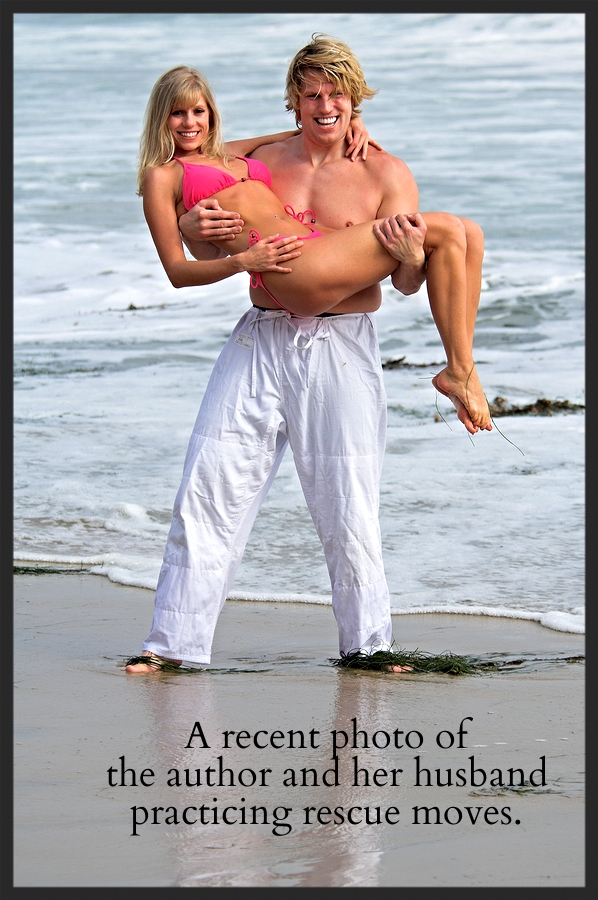
bigstock-A-man-carrying-a-pretty-blond--27817625 (1)Twenty seven years ago, when David and I first married, among the things I heard him say was that he wanted “an independent woman” as a wife. To someone like me, who has m.s. and who learned in childhood that playing “the victim” was the way to being loved, that description of “independent” was scary. Not because of working, because I always have, but from the standpoint of not being loved.

Over the years, I’ve come to learn that David’s definition of “independent” was far from what I had thought. Assumptions are relationship killers; being a psychotherapist doesn’t always help what’s personal. But worrying about it and trying to deny my disease because of my assumptions about “independence” led me to a surprising conclusion. I am independent when I accept responsibility for my health – maintaining it or mistreating it.

I was really mistreating our marriage by not practicing self-care as I couldn’t possibly be a good partner if I was sick.

I gave David the burden of my progressive disease instead of doing what I could about it myself. That included all of those self-care things I’m lousy at, like not overdoing it, slowing down, and treating myself well, like eating more than 2 cookies and a cup of coffee for breakfast.  And especially treating my psychotherapy clients better than I treat myself.

David gives me unwavering physical and emotional support, even though he’s stopped trying, bless his heart, to save me from myself. I never listened, anyway.

In the process of leaving me to my own devices David’s unwittingly given me the best, and most terrifying gift of all:  the responsibility for being myself.

This first appeared in Disability.gov’s “Connections”as The Best Gift David Ever Gave Me, which was also published as a blog in 2012. Kathe Skinner is a Relationship Coach with over 17 years experience as a Marriage & Family Therapist.  She lives in Colorado with David and their two hooligan cats, Petey and Lucy.

copyright, 2012 Kathe Skinner

THE UP SIDE OF AWFUL

bigstock-little-girl-in-beautiful-dress-34574639How can I do what I do?  Especially when I awfulize.

I know now how to help someone out of quicksand, but that wasn’t until much later, after the little girl died.

Friends’ two-year-old daughter and her little brother were in mom’s car when it was t-boned on an icy road.  The little boy had cuts and bruises but the little girl was paralyzed from the neck down.  She couldn’t breathe, move, or speak.

When we visited the Pediatric ICU, she looked mystified.

And something else, beyond all that, or maybe I imagined it.

How could a parent, any parent, explain to a little girl the reason that the her life of movement, laughter, and speech was in an instant replaced by the very opposite.   No one, no one, can make sense of something like this.

No one could; I know, I tried.  For a year I looked for someone or something to explain it to me.

When she died a year later, I experienced the most intense grief I’ve felt before or since, even at the death of my parents.  I passed a year immersed and overwhelmed by sorrow and anger, finding nothing to ease their pain.

Only now, twenty-five years later, do I understand that my intense grief and terror is a recognition of my own childhood experience  being “unable to speak”.   There is no “new normal”; while adaptation occurs, and each of us goes on, there is, I think, at the core of us something unhealed.

For me, that ancient pain is calmed as I help clients face and express their own astonishment at what has happened to them.  Even though I could do nothing to give a “voice” to that little girl, her benevolence has taught me how to speak.

Kathe Skinner is a therapist and relationship coach  specializing in couples work, especially where relationships are affected by invisible disability.  Multiple sclerosis has taught Kathe that there are many “languages” other than the ones we may be born with — like walking instead of running, or writing music instead of singing.  She and her husband David, with their two eloquent cats, Petey and Lucy, live in Colorado.  By the way, you help someone out of quicksand by extending a branch to pull them out, not by going under yourself by jumping  in to help.

WOMEN’S LIB IS A LIE

Speaking from a disabled woman’s point of view, living the “lib lie” in relationship simply doesn’t work.

The “lib lie” I’m talking about is putting career before relationship, being damned if I’ll make cacciatore, or being complimented for how I look.

Where was my head all these years.  I’ll tell you where: in the conference room, the kitchen, and in front of the mirror.

Truth be told, I like making cacciatore — and being appreciated for it.  The same as anybody would, including guysfishy.  Liberation doesn’t stop at individual freedom; its true worth is in how liberated our partnership is.  Oh, stop — I’m not talking about three ways.  See, if one partner realizes cultural or family baggage enough to detach a bit from it and the other partner is clueless, the relationship’s pretty lopsided.  But hey, some partners like their partners a tad underdone.

Clueless for real or clueless pretended, either path leads right back to a problem that’s repeated itself for generations.

Sherod Miller, co-founder of Interpersonal Communication Programs, defines a healthy relationship as the collaboration of two strong people “bridging” to each other across a committed lifetime.  Paula Derrow, writing in The New York TImes, calls it “leaning in together”.  Writing recently about her marriage in The New York Times, Paula describes a marriage right out of Home Depot.

A do-it-yourselfer, her marriage to another do-it-yourselfer spanned two states.   Their finances were separate, and so was ownership of their separate homes.  Except for weekends, each lived a separate life.

Talk about distancing.

When Paula was laid off from her job as a writer, she had reason to need her husband in very real ways, one assumes for the first time. Lying awake, the writer struggled with questions about her independence, whether she could afford to continue living separately, and whether her husband was encouraging and supportive only as a way to get her to come live with him and cook up a cacciatore.

I won’t say where Paula Derrow’s head was, but to come to the realization that her marriage was about the two of them together, not separately, is, to put it charitably, wrong-thinking.

More than most, those of us with disabilities, invisible or not, have had to come to terms with the lie that we can make it on our own.

The poor state of the world economy has left millions out of work, stressing personal worth and identity.   With so many jobless, you’d think social perception about being unemployed would’ve changed; it hasn’t.  Role expectations die hard.

Changes in the social order are happening all around us; role-turbulence is no longer reserved for the disabled or marginalized others.

These days, anyone can become marginalized.

Relationship’s great test is how to be together without losing oneself; how to get from one place to another while travelling together.

Kathe Skinner is a Marriage & Family Therapist and Relationship Coach specializing in work with couples whose relationship is affected by invisible disability.  Like most of her generation, she has been powerfully affected by the Women’s Movement of the 1960s and 1970s and has had trouble integrating that independence with the sometimes-limitations of multiple sclerosis.   She and her husband David live in Colorado where they teach couples to collobate their way to happier relationships.  Read more about she and David’s Communication Workshops at http://www.BeingHeardNow.com.

CHOOSING TO BE DISABLED.

Even if the claims that candy causes behavioral problems are anecdotal, one thing is for sure:

An American diet full of sugar is a significant cause of childhood obesity.

But it tastes so darned good.

The Centers for Disease Control report that 1 in 6 children between the ages of 2 and 19 is obese. Aside from the psychosocial aspects of being bullied or having no date for the 8th grade dance, there are significant health risks.

Like asthma, high cholesterol, high blood sugar, cardiovascular disease, Type 2 diabetes, and, as researcher Ashleigh May says, mental health problems.

Sugar induces tolerance, meaning the more you eat the more you need to feel satisfied. What’s recommended for children’s sugar intake is a mere 6-9 teaspoons a day while what’s consumed is at least 4 times that, Halloween candy not included.

At some point, people can make choices about how their lives unfold; whether or not choices are made is harder to pull off than it is to suggest.

Most of us who are disabled, invisibly or not, wouldn’t choose disability to be part of our lives. How horrifying is it that some obese people have that option and choose otherwise.

Although she was a chunk-of-a-baby, Kathe Skinner didn’t grow up that way. A Marriage & Family Therapist and Certified Relationship Coach, Kathe specializes in working with couples, especially those when invisible disability is part of the relationship mix. She and husband David reside in Colorado with their two cats, Petey and Lucy. Lucy and David could stand to pass on a second helping of kibbles.

A PRETTY BIG BUTT

Americans who don't show up in labor force statistics because they didn't keep up a regular job search.  Source: U.S. Bureau of Labor Statistics.  Graph: CNNMoney

Americans don’t show up in labor force statistics when they stop searching for a job.  Source: U.S. Bureau of Labor Statistics, 2011. Graph: CNNMoney

Doing work you’re passionate about has been the imperative for years now.

This, despite the contined high unemployment rate, a rate that doesn’t even reflect people who gave up trying to find work years ago. Ironically, they’re called the “invisible unemployed” and there’s about 86 million of them.  Like the “invisibly disabled”, both are a large part of our society where the “invisible” part suggests monkeys with hands over their eyes.

That we’re supposed to be finding passion through work might explain why the U.S. birth rate in 2012 declined for the 5th year in a row.

If you’re tired, though, or queasy, or breathing with difficulty, passion may be easier to define than it might be to find.  Passion may be found in small measures.  It’s simple:  sleep, a settled body, breath.

Being invisibly unemployed or invisibly disabled are both shameful ways of being.  Many in the mainstream believe there’s nothing wrong that getting off their collective lazy asses wouldn’t fix.   That’s a pretty big butt.

Being marginalized for any reason wreaks havoc with the central core of us and not surprisingly with relationship – marital, friend network, family.

For the people marginalized in this way, hunting down passion is a luxury.  Suggesting there’s a choice about it is lofty, naive, and exclusionary.

However.

Invisible or not, it’s a mental health responsibility for each of us to somewhere find joy, pleasure, peace, passion or whatever you want to call it.  To take charge of being part of humanity; to assert to yourself your right to be.  That might or might not be through volunteer or paid employment, marriage or relationship, or the family/friend network.

Kathe Skinner is married to one of the “invisible unemployed”; she herself is (sometimes) “invisbly disabled” by multiple sclerosis.  She’s a Marriage & Family Therapist and Relationship Coach on Colorado’s Front Range.  More about the two of them at http://www.BeingHeardNow.com.